

• Cellular Detox
  • Cellular Health
  • Diet & Nutrition
  • Lifestyle
  • Recipes
  • Shop
Cell Health NewsCell Health News
  • Cellular Detox
  • Cellular Health
  • Diet & Nutrition
  • Lifestyle
  • Recipes
  • Shop

The Hidden Complexity of Sea Salt Safety

Home » Articles » The Hidden Complexity of Sea Salt Safety
The Hidden Complexity of Sea Salt Safety

The Hidden Complexity of Sea Salt Safety

November 6, 2025 Posted by The Cell Health Team
FacebookTweetPinLinkedIn

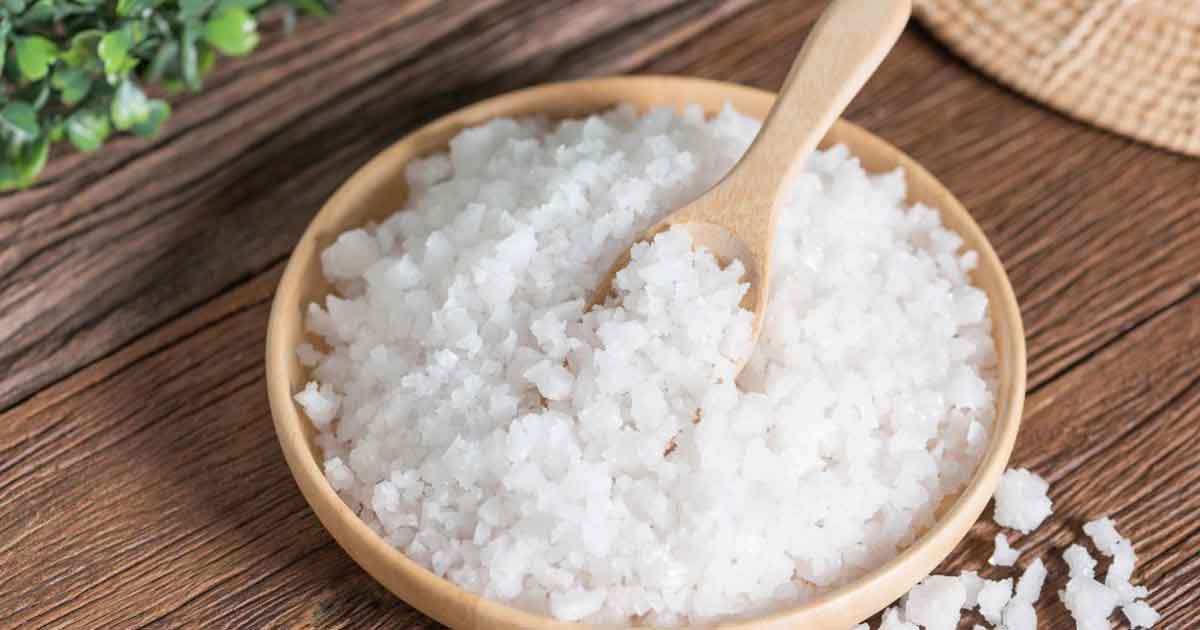
Sea salt has earned a strong reputation as a cleaner, more nutrient-dense alternative to conventional table salt, mainly due to its natural origin and minimal mechanical processing in its purest form. For many consumers, the visual appeal of coarse grains, translucent crystals, and rustic packaging reinforces the belief that sea salt is inherently superior and safer for long-term health.

However, the assumption that all sea salt is equal ignores a growing body of evidence showing that mineral content, environmental conditions, and commercial processing can dramatically alter both its benefits and potential risks. While large retailers like Costco provide convenience and bulk purchasing options, the quality spectrum of salt found on mass-market shelves varies significantly, making product literacy more essential than ever for individuals seeking optimal wellness.

The journey from seawater to dinner table is far from standardized, and it is within this journey that contaminants may be introduced or nutrients depleted, shaping salt into a dramatically different product than what most consumers imagine.

How Ocean Health Directly Influences Salt Integrity

Salt harvested from seawater carries a chemical signature of the environment from which it originated, making the oceans both a source of nourishment and a reservoir of modern pollutants. Over the past century, global marine ecosystems have absorbed industrial discharges, agricultural chemical runoff, fuel emissions, and plastic debris on a scale that has significantly altered ocean chemistry. One of the most pervasive byproducts of this contamination is microplastics, ultra-small fragments of plastic that fail to biodegrade and circulate indefinitely through water systems.

These particles are now routinely detected in harvested sea salts, with studies confirming that geographic origin plays a significant role in contamination density. Regions with high levels of maritime traffic, coastal manufacturing, and insufficient waste regulation tend to produce salt containing higher traces of synthetic particles and chemical residues. Unlike nutrients that the body can utilize or excrete with relative efficiency, microplastics are biologically persistent. They can contribute to systemic inflammation and cellular distress when chronically ingested, even in small amounts over time.

Heavy Metals and Bioaccumulation: The Invisible Compounds

In addition to synthetic particulates, dissolved heavy metals such as arsenic, cadmium, mercury, and lead are present in many marine environments due to industrial processes, soil erosion, and the release of fossil fuel emissions. These heavy metals are not uniformly distributed, meaning that salt sourced from different global regions can vary drastically in purity even if harvested using similar methods. Unlike many food contaminants that pass through the body, heavy metals are bioaccumulative, meaning the body does not eliminate them efficiently; instead, they are stored in tissues, bones, and organs.

Over time, accumulation can disrupt cellular function, displace essential minerals, increase oxidative stress, and interfere with the regulation of neurological, hormonal, and metabolic processes. Chronic exposure to low levels of heavy metals has been linked to accelerated inflammatory signaling, mitochondrial dysfunction, and an increased burden on detoxification pathways. The idea that a mineral-rich salt is automatically beneficial overlooks the fact that naturally occurring minerals and toxic metals are not mutually exclusive, and both can coexist in the same product, depending on environmental and industrial conditions.

Processing Differences: Mineral Salt vs. Refined Sodium

The transformation of harvested salt into a retail product involves varying degrees of mechanical refining, dehydration, bleaching, chemical stabilizing, and additive infusion. Traditional, unrefined sea salt undergoes minimal processing, preserving trace minerals such as magnesium, potassium, and calcium, as well as trace electrolytes, which contribute not only to flavor complexity but also to fluid balance and cellular conductivity within the body.

In contrast, industrially refined salts are mechanically stripped down until nearly all non-sodium elements are removed, leaving behind sodium chloride in its most chemically isolated form. Many of these salts also undergo anti-caking treatments, a process that introduces manufactured compounds designed to prevent clumping but offer zero nutritional value. From a cellular biology perspective, refined sodium chloride behaves differently in the body compared to whole mineral salt because it lacks the cofactors that assist electrolyte balance and intracellular absorption.

The result is a product that enhances saltiness but does not provide the biochemical synergy that natural mineral compositions offer, making it a fundamentally different ingredient despite sharing the same broad category label.

Understanding What ‘Natural’ Actually Means in the Salt Industry

Terms such as natural, pure, organic, or harvested from the sea are not standardized labels within the salt market, allowing broad interpretation in product descriptions. Unlike regulated certifications that undergo mandatory third-party testing, packaging statements about purity often reflect marketing positioning rather than verifiable mineral testing results. A salt described as “natural sea salt” may still contain additives, drying agents, or contaminants depending on how it was harvested and processed before sale.
Similarly, visually appealing characteristics, such as pink or gray hues, may indicate the presence of minerals, but do not confirm safety or purity in isolation. The assumption that appearance correlates with nutritional superiority has led many consumers to equate color with quality, despite a lack of scientific validation supporting this belief. Mineral content, environmental safety, and additive transparency are far more reliable indicators than visual appeal when evaluating salt for long-term dietary use.

Kirkland Sea Salt: Purity Meets Accessibility

 Among widely available retail salt options, Kirkland Sea Salt stands out as a comparatively reliable choice due to its sourcing region, processing standards, and absence of unnecessary chemical alterations. Harvested from Australian coastal waters, this salt benefits from one of the world’s most stringent environmental monitoring infrastructures, where food-grade exports undergo contamination screenings that exceed regulatory minimums in many other regions.

Australia’s relatively lower levels of plastic concentration and industrial marine pollution provide an advantage not easily replicated by salt sourced elsewhere, especially in highly trafficked or poorly regulated waterways. Kirkland Sea Salt also retains a broader trace mineral profile compared to highly refined salts, offering more complex electrolyte support rather than functioning as isolated sodium alone. The combination of environmental regulation, minimal processing, and large-batch affordability makes this option a practical solution for households seeking more nutrient-aligned alternatives without transitioning into specialty price categories. It strikes a balance between accessibility and integrity, offering a product that meets both economic and physiological needs simultaneously.

Himalayan Pink Salt: A Mined Mineral With Limitations to Consider

Himalayan pink salt differs fundamentally from ocean-derived salts, as it originates from ancient seabed deposits compressed within geological formations, rather than modern marine evaporation. This characteristic means it is not exposed to contemporary ocean pollutants such as microplastics, which is often cited as a primary advantage. However, the mineral concentration that gives pink salt its distinctive color also signals the presence of iron oxides and other trace elements, which may include low levels of heavy metals depending on the depth and composition of extraction sites.

Unlike surface ocean salt, which reflects the environmental conditions of the present day, mined salt reflects the geological history of the location where it was formed, meaning its purity and contaminant profile are tied to ancient mineral activity rather than modern pollution. While it contains trace minerals that contribute to flavor complexity, there is no conclusive evidence that these minerals are present in concentrations high enough to deliver measurable physiological benefits when consumed in culinary amounts.

For individuals who prioritize variety in mineral sourcing, pink salt can play a complementary role. Still, it is not immune to the presence of heavy metals simply because it comes from rock rather than seawater.

Kosher Salt Misconceptions and the Chemistry of Refinement

Kosher salt is frequently misunderstood as a salt category defined by purity, religious preparation, or nutritional value, when in fact the term refers solely to crystal size and function in the koshering process of drawing moisture from meat. The chemical composition of most commercial kosher salts, including large national brands, is more closely aligned with refined table salt than with unprocessed mineral salt. During manufacturing, minerals are stripped, moisture is controlled, and anti-caking agents are added to ensure the product pours freely under a wide range of storage conditions.
One of the most debated additives is sodium ferrocyanide, a compound included to prevent grain clumping by binding moisture before it alters the crystal structure. Although considered safe within regulatory thresholds, it originates from cyanide-related industrial chemistry, which raises concerns for individuals intentionally minimizing exposure to synthetic processing agents. The key distinction is not necessarily acute toxicity, but cumulative exposure from multiple small dietary sources that contain engineered stabilizers, preservatives, and processing aids not found in whole mineral foods.

Why Salt Is More Than a Flavor Enhancer

Sodium plays a central role in nerve signaling, muscle contraction, cellular hydration, and electrical conductivity across cell membranes, making salt an essential nutrient rather than a discretionary seasoning. However, its physiological behavior is directly affected by the matrix in which it exists, meaning the body processes isolated sodium chloride differently than sodium that exists alongside naturally occurring co-minerals. Magnesium, potassium, and calcium, which are often found in whole sea salts, help regulate electrolytes in a balanced manner, allowing sodium to function more efficiently without overwhelming cellular signaling pathways. When sodium is ingested in isolation, the body must draw from internal mineral reserves to achieve electrolyte balance, creating a nutritional deficit that whole salts help buffer naturally.
This distinction highlights why two salts with identical sodium content can produce different biological effects depending on what else was removed or preserved during production. Clean, mineral-retaining salts support hydration at the cellular level, whereas refined salts deliver a one-dimensional mineral signal that lacks physiological support structures.

Contamination Load and the Long-Term Cellular Environment

The concept of bodily toxic burden refers to the accumulation of environmental and dietary exposures that place chronic stress on detoxification pathways and cellular repair mechanisms. High-quality salt alone cannot offset the effects of poisonous exposure, but low-quality salt can contribute incrementally to it when consumed daily over several decades. Heavy metals, microplastics, whitening agents, anti-caking compounds, and refining byproducts introduce micro-exposures that compound over time, even when present in amounts deemed safe on an individual basis.
Cellular stress rarely originates from a single acute source, but rather from the cumulative impact of thousands of small exposures that overwhelm the body’s capacity to neutralize and excrete them efficiently. Selecting salt that is both minimally processed and environmentally screened contributes to a lower overall input of avoidable contaminants, supporting cellular resilience.

Strategic Salt Selection as a Tool for Long-Term Wellness

Whole sea salts that retain natural electrolytes, originate from regions with strong environmental oversight, and undergo minimal industrial modification, provide the most balanced option for daily use. Mined salts can contribute variety, but should not be interpreted as inherently cleaner or superior without supporting contamination testing. Highly refined salts that rely on stabilizers or textural additives deliver flavor but not cellular benefit, making them less aligned with long-term wellness goals rooted in metabolic and detoxification health. Salt selection will not singularly determine health outcomes, but it represents an easily modifiable daily exposure point that influences hydration, inflammation, mineral balance, and toxic load over time.

The Takeaway for Informed Wellness Decisions

The narrative that all sea salt is clean, natural, or mineral-rich is overly simplistic when examined in light of environmental realities and commercial processing methods. Retail accessibility does not guarantee purity, just as visual appeal does not guarantee nutritional integrity; meaning salt must be evaluated through its sourcing, processing, and contamination risk, rather than relying solely on marketing language or appearance.

Among large-scale retail options, salts sourced from regions with strict marine protections and minimal industrial processing offer the most consistent balance of safety, mineral retention, and affordability. Choosing salt with environmental sourcing in mind, minimizing chemical additives, and favoring naturally mineralized forms over stripped sodium crystals ensures that a daily essential nutrient supports cellular function. Small dietary decisions compound over time, and in the case of salt, the simplest choice, selecting cleaner, less processed sources, becomes one of the most practical interventions for long-term cellular well-being, hydration equilibrium, and reduced dietary toxic exposure.

References:

  1. Ujjaman Nur, A. A., Hossain, M. B., Banik, P., Choudhury, T. R., Liba, S. I., Umamaheswari, S., Albeshr, M. F., Senapathi, V., Arai, T., & Yu, J. (2022). Microplastic contamination in processed and unprocessed sea salts from a developing country and potential risk assessment. Chemosphere, 308(Pt 2), 136395.https://doi.org/10.1016/j.chemosphere.2022.136395
  2. Olufemi AC, Mji A, Mukhola MS. Potential Health Risks of Lead Exposure from Early Life through Later Life: Implications for Public Health Education. International Journal of Environmental Research and Public Health. 2022 Nov 30;19(23):16006. doi: 10.3390/ijerph192316006. PMID:36498077; PMCID:PMC9741093
  3. Agency for Toxic Substances and Disease Registry (ATSDR). (2006, July). Toxicological profile for cyanide: Chapter 3, Health effects. U.S. Department of Health and Human Services.https://www.ncbi.nlm.nih.gov/books/NBK600901/
FacebookTweetPinLinkedIn

The Latest from Cell Health News

  • Is Buying Beef in Bulk Still Smart?
  • A Non-Toxic Bedroom for Better Sleep
  • Cast Iron Cookware and Human Health
  • The Overlooked Health Influence of Everyday Socks
  • The Non-Toxic Kitchen Reset
  • The Hidden Side of Toilet Paper
  • A Cellular Health Perspective on Soda Consumption
  • Non-Toxic Staples at Warehouse Stores
  • The Chemical Burden Inside Modern Vehicles
  • How Plastic Packaging Changes Milk

Disclaimer: The entire contents of this website are based upon the opinions of our writers and contributors unless otherwise noted. Individual articles are based upon the opinions of the respective author, who retains copyright as marked. The information on this website is not intended to replace a one-on-one relationship with a qualified health care professional and is not intended as medical advice. It is intended as a sharing of knowledge and information from the research and experience of the Cell Health News community. You are encouraged to make your own healthcare decisions based on your research and in partnership with a qualified healthcare professional.

The information contained on this website is presented for the purpose of educating people. Nothing contained on this website should be construed nor intended to be used for medical diagnosis or treatment. It should not be used in place of the advice of your physician or other qualified health care provider. Should you have any healthcare-related questions, please call or see your physician or other qualified healthcare providers promptly. Always consult with your physician or other qualified health care provider before embarking on a new treatment, diet, or fitness program.

You should never disregard medical advice or delay in seeking it because of something you have read on this website.

© Cell Health News 2026

  • Medical Disclaimer
  • Privacy Policy
  • Anti-Spam Policy
  • Terms of Use