

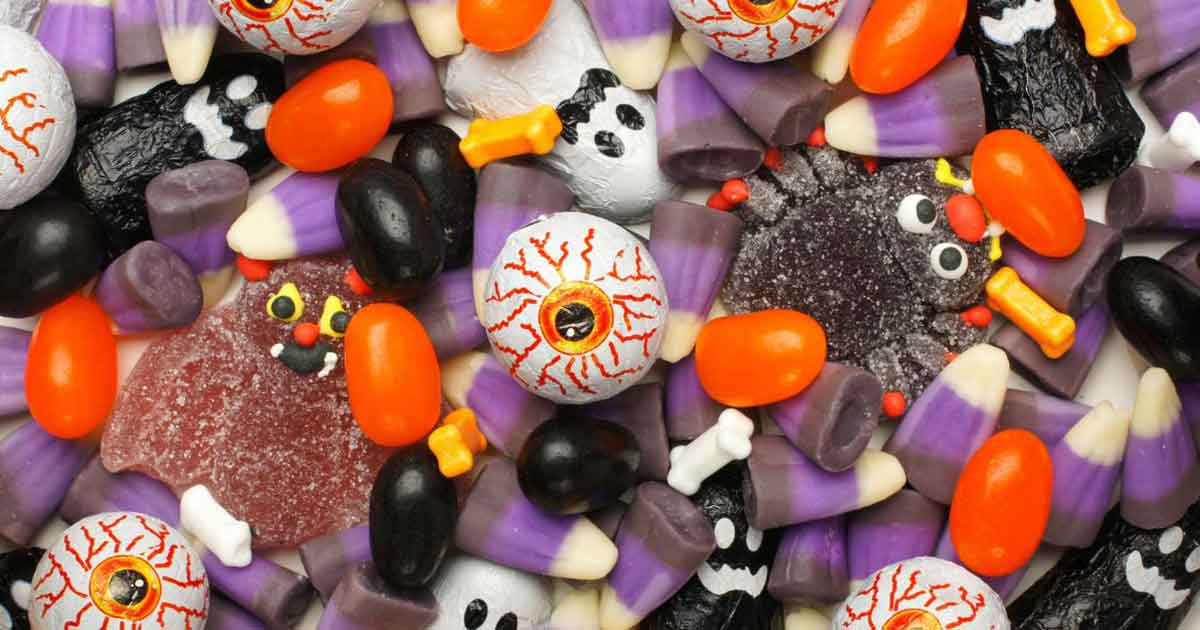
Every fall, front yards glow with carved pumpkins, neighborhoods hum with excitement, and children race from door to door collecting brightly wrapped sweets. Halloween is meant to celebrate imagination, tradition, and play. Yet beneath the costumes and cobwebs lies something far more alarming than a haunted house: the shocking truth about what’s inside those colorful treats.
Americans consume roughly 745 million pounds of candy each Halloween season, filling homes with sugar-packed confections loaded with artificial dyes, chemical preservatives, and industrial additives. These ingredients, many of which are restricted or banned in countries like the United Kingdom and throughout the European Union, continue to be used freely in the United States. The problem extends beyond a temporary sugar high to the hidden toxic load that comes with every bite.
What’s Really Inside the Candy Bowl
Many sweets that fill Halloween buckets contain artificial colors such as Red 40, Yellow 5, and Blue 1, dyes linked to behavioral issues in children, including hyperactivity and reduced attention span. Studies have also suggested potential links between these dyes and DNA damage or carcinogenic activity. Common ingredients like high fructose corn syrup can contribute to metabolic dysfunction, insulin resistance, and systemic inflammation, setting the stage for long-term health concerns. Titanium dioxide, a whitening agent used to make candy coatings appear brighter, has been banned in the European Union because evidence suggests it may cause DNA damage. Yet in the United States, it’s still used in candies, chewing gum, and baked goods. Combine this with synthetic flavorings, emulsifiers, and preservatives designed to extend shelf life, and the result is a product that has more in common with a lab experiment than a simple sweet.
The Real Consequences of “Just One Night”
It’s tempting to dismiss Halloween candy as a once-a-year indulgence that doesn’t make much difference in the long run. But experts emphasize that the issue isn’t the sugar rush of a single night; it’s the cumulative effect of exposure to these additives across many sources. Artificial dyes, preservatives, and processed sugars are already part of the daily diet for many American children through breakfast cereals, snacks, and beverages.
Even small exposures can have significant biological effects when added to an existing toxic burden, including environmental chemicals, microplastics, and air pollutants. Children are especially vulnerable because their brains, nervous systems, and detoxification pathways are still developing. Over time, consistent exposure to these compounds has been associated with behavioral challenges, hormone imbalances, immune system strain, and chronic inflammation. What’s most concerning is how normalized these risks have become. Questioning candy ingredients often earns parents a reputation for being overprotective or uptight, yet protecting a child’s health should never be treated as a social faux pas.
How Culture Normalizes Chemical Candy
Halloween has been commercially engineered to revolve around branded sweets, with candy companies spending millions on advertising that equates sugar with joy. The cultural expectation is that every child should return home with a mountain of name-brand candy, and every household should participate by handing it out. This social pressure can make parents feel guilty or isolated if they opt for healthier alternatives. What society rarely questions is why the United States continues to allow chemicals that other nations have decided are unsafe for children. Instead of labeling health-conscious parents as “fun police,” perhaps the greater question is why candy companies aren’t being held to higher safety standards. The marketing narrative tells families that candy equals happiness, but it delivers a steady diet of chemicals wrapped in nostalgia.
The Chemistry Experiment in Disguise
Artificial dyes are not the only hidden threat. Many Halloween candies also contain emulsifiers like polysorbate 80 and carboxymethylcellulose, which have been shown in animal studies to disrupt gut bacteria and increase intestinal permeability. This “leaky gut” effect can drive systemic inflammation and may contribute to autoimmune or metabolic diseases. Preservatives such as BHA and BHT, added to prevent oxidation, are classified as possible human carcinogens by international research agencies. Even the chocolate-based candies that seem more natural often contain trace amounts of heavy metals like lead and cadmium, depending on sourcing and manufacturing practices. Combining these contaminants in small but repeated doses creates a toxic cocktail that modern health science can no longer ignore.
Why Awareness Is the First Step to Change
Food manufacturers rely on consumer demand, and public awareness has historically driven reform. The market responds when parents and communities begin reading ingredient labels, supporting dye-free and organic brands, or voicing concerns to local retailers. Awareness also opens the door to education, empowering children to ask questions about what they eat. Teaching kids to connect their food choices with their energy levels, focus, and mood builds health literacy that lasts far beyond one holiday.
Building a Healthier Halloween Tradition
Halloween doesn’t have to lose its magic to become safer. Many families are redefining the holiday by introducing creative, toxin-free alternatives. Organic and naturally flavored candies, often sweetened with coconut sugar or fruit juice, offer a way to keep treats on the table without harmful additives. Non-food ítems, such as glow sticks, stickers, or small toys, are gaining popularity as “treats” that don’t impact health. Some parents participate in the “Switch Witch” tradition, where children trade their candy stash for a small gift or experience, keeping the fun but minimizing exposure. Neighborhoods can also come together to host healthier trick-or-treat routes or community events that focus on costumes, games, and imagination rather than mass candy consumption.
From Sugar Rush to Conscious Celebration
Reducing chemical-laden candy doesn’t make anyone the “bad guy.” It reflects a growing movement toward mindful living and personal responsibility for what enters the body. This shift mirrors broader awareness across the food industry, where artificial dyes, GMOs, and preservatives are scrutinized more closely than ever. Each family that chooses a cleaner option contributes to a cultural shift from toxicity to true wellness. When communities embrace this mindset collectively, it becomes easier to celebrate without compromise.
How Policy and Industry Can Support Change
Although personal choices matter, larger systemic changes are needed to protect public health. Other countries have set strong precedents: the European Food Safety Authority banned titanium dioxide due to potential genotoxic effects, and the United Kingdom requires warning labels on foods containing certain synthetic dyes. In contrast, despite mounting scientific evidence of harm, the U.S. Food and Drug Administration allows these additives. Advocacy from consumers and health organizations can push for stronger regulations, more transparent labeling, and the removal of unsafe chemicals from the food supply. Transparency and accountability should not be optional regarding products marketed to children.
Creating Joy Without the Toxins
Reclaiming Halloween as a celebration of creativity and connection doesn’t require eliminating all indulgence; it simply means being intentional. A fun Halloween should spark imagination and laughter, not contribute to chronic health problems. Offering safer treats, supporting companies prioritizing clean ingredients, and teaching kids about mindful choices can make the holiday more meaningful. Instead of focusing solely on candy, families can emphasize costume-making, storytelling, pumpkin carving, or community gatherings that strengthen bonds.
The Takeaway: A Healthier Future Starts With Awareness
Halloween’s scariest secret isn’t ghosts or ghouls: the invisible chemical load hides in plain sight inside every trick-or-treat bag. But knowledge transforms fear into empowerment. Families can protect their health by reading labels, questioning norms, and supporting safer alternatives while enjoying fun. Small actions taken in one household can ripple outward, influencing neighbors, schools, and communities. When people begin to demand better from food manufacturers, the industry follows.
This Halloween, consider redefining what “treat” really means. Health should never be sacrificed for convenience; joy doesn’t have to come wrapped in toxins. The sweetest traditions nourish body, mind, and spirit; something worth celebrating long after the pumpkins have faded.
References:
- Hossain, M. S., Wazed, M. A., Asha, S., Hossen, M. A., Fime, S. N. M., Teeya, S. T., Jenny, L. Y., Dash, D., & Shimul, I. M. (2025). Flavor and well-being: A comprehensive review of food choices, nutrition, and health interactions.Food Science & Nutrition, 13(5), e70276.https://doi.org/10.1002/fsn3.70276
- Hernandez, E., Moore, A. M., Rollins, B. Y., Tovar, A., & Savage, J. S. (2022). Sorry parents, children consume high amounts of candy before and after a meal: Within-person comparisons of children’s candy intake and associations with temperament and appetite.Children (Basel), 10(1), 52.https://doi.org/10.3390/children10010052