

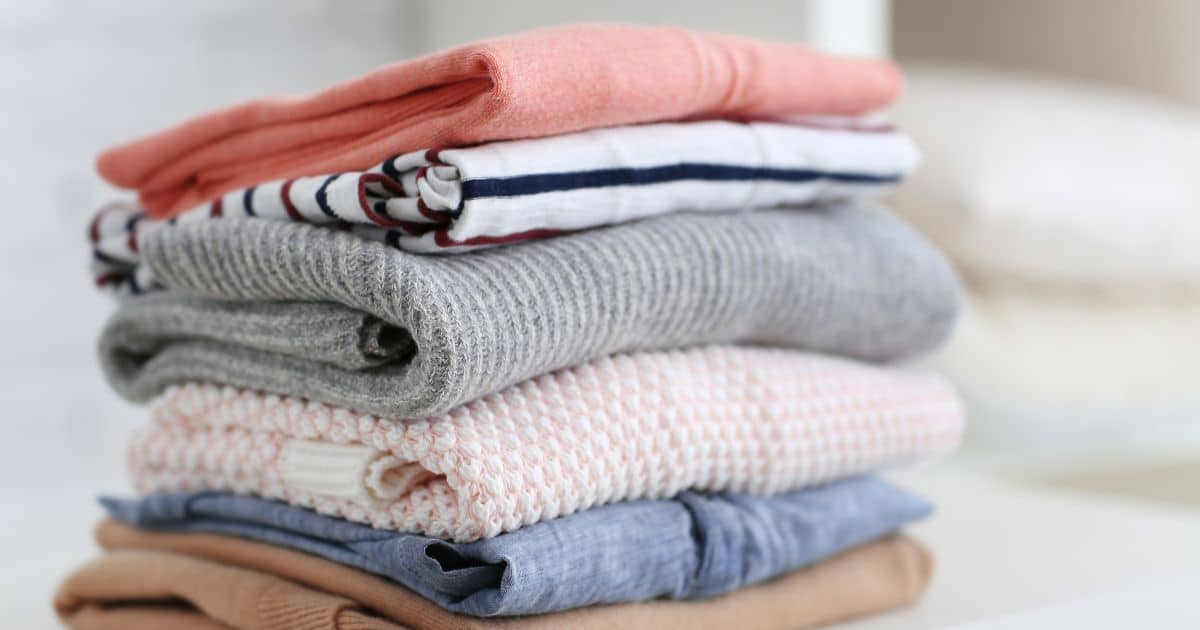
Clothing is easy to overlook when thinking about everyday chemical exposure, but textiles can remain against the skin for hours at a time. Underwear, pajamas, workout clothes, socks, and base layers may have prolonged contact with the body, making the materials and chemical treatments used in these garments worth understanding. A lower-toxin wardrobe does not require replacing every item in a closet, but choosing simpler fabrics and avoiding unnecessary chemical finishes can be a practical way to reduce potential exposure.
What Makes Clothing a Potential Source of Chemical Exposure?
The fiber listed on a clothing label is only one part of the equation. A finished garment may also contain dyes, printing chemicals, resins, coatings, water-repellent treatments, antimicrobial agents, flame retardants, sizing compounds, and other substances introduced during manufacturing. This means that a natural fiber is not automatically chemical-free, while a synthetic fiber is not automatically hazardous.
A useful approach is to consider fiber composition, chemical finishes, duration of skin contact, and how the garment is used. Clothing worn occasionally over several layers presents a different exposure scenario than underwear worn all day or activewear worn against sweaty skin. For anyone trying to simplify textile choices, the highest-contact garments are a logical place to begin.
Polyester and Synthetic Blends
Polyester is a petroleum-derived synthetic fiber used extensively for its low cost, durability, lightweight, wrinkle resistance, and ease of manufacture. It is found in everything from everyday shirts and pajamas to underwear, children’s clothing, athletic apparel, and bedding. The presence of polyester alone does not establish that a garment will cause a health problem. Still, it does mean the textile is manufactured from a synthetic polymer rather than a natural fiber.
Synthetic fabrics can also behave differently from natural fibers in relation to heat, moisture, and skin comfort. For people who experience irritation or discomfort from certain garments, breathable natural fibers may be preferable, particularly for underwear and other clothing worn close to the body. A simple strategy is to prioritize cotton, linen, hemp, or wool for everyday close-to-skin clothing when practical.
Check the percentage, not just the marketing language. A shirt advertised as a “cotton blend” might contain substantially more polyester than cotton. Looking at the actual fiber percentages provides considerably more information than relying on the product description alone.
Rayon, Viscose, and Modal: Plant-Based Does Not Mean Untreated
Rayon, viscose, modal, and related regenerated-cellulose fabrics can feel exceptionally soft and may be marketed as natural alternatives to conventional synthetics. These materials originate from cellulose, often obtained from wood or other plant sources, but the cellulose must undergo substantial chemical processing before it becomes a textile fiber. Their environmental and chemical profiles, therefore, depend heavily on the manufacturing process and finished product.
This does not make every regenerated-cellulose garment unsafe. However, consumers specifically seeking minimally processed textiles may prefer straightforward natural fibers when the goal is to reduce the number of manufacturing steps and chemical treatments. “Plant-derived,” “natural-feeling,” and “minimally processed” are not interchangeable terms.
Be Cautious With Stain-Resistant and Water-Repellent Clothing
Performance finishes deserve particular attention when building a lower-toxin wardrobe. Clothing marketed as stain-resistant, water-repellent, oil-resistant, or highly durable against spills may have been treated with additional chemicals to create those properties. One important chemical category associated with water, oil, and stain resistance is PFAS (per- and polyfluoroalkyl substances).
PFAS are a large class of highly persistent chemicals, and some individual PFAS have been associated in human studies with adverse health outcomes, including immune-related effects. The presence of a water-resistant feature does not prove that a particular garment contains PFAS; formulations vary. Choosing untreated clothing for everyday use can reduce the need for these finishes.
The practical rule is simple: if two garments serve the same purpose and one has unnecessary stain- or water-resistant performance, the untreated option is the simpler choice. Specialized technical clothing may have legitimate functional benefits, so the goal is not to eliminate performance textiles but to reserve them for situations where their properties are actually useful.
Wrinkle-Free, Easy-Care, and Permanent-Press Finishes
Wrinkle-free clothing can save time, but wrinkle resistance is generally achieved through textile finishing rather than the fiber’s natural properties. Some wrinkle-resistant processes have historically relied on formaldehyde-releasing resins, although textile chemistry and regulations have changed over time, and products vary considerably.
For everyday clothing, accepting a few wrinkles can be an easy way to avoid unnecessary performance finishes. Linen, cotton, and other natural fabrics do not need to look perfectly pressed to be functional, and choosing simpler garments can reduce the number of treatments required to achieve a particular appearance.
Activewear Deserves Extra Attention
Workout clothing creates a unique situation because garments are often worn directly against the skin while body temperature and sweating increase. Synthetic fibers such as polyester, nylon, and elastane are extremely common in activewear because they provide stretch, durability, lightweight construction, and moisture-management properties.
Research is beginning to investigate chemical migration from textiles under conditions that mimic sweating or prolonged skin contact. A 2024 study examining bisphenols in conventional and recycled textiles found measurable levels of several bisphenol compounds and reported that simulated sweating increased potential dermal exposure compared with dry conditions; washing also reduced concentrations. A separate 2025 study specifically examining women’s underwear detected BPA, BPS, and BPF and found greater migration of some compounds into artificial sweat. However, the researchers’ estimated non-carcinogenic risks were considered acceptable.
These findings do not establish that wearing synthetic clothing causes disease. They do suggest that textile chemistry and chemical migration are legitimate areas of scientific investigation, particularly when clothing is worn against sweaty skin for extended periods. People who want to minimize potential exposure can consider natural-fiber options for lower-intensity activities and look for brands that disclose their textile standards and chemical restrictions.
Underwear Is a Logical Place to Start
If only one category of clothing is going to be reconsidered, underwear is a practical starting point. It is worn for many hours, remains in direct contact with the skin, and covers areas where heat and moisture can accumulate.
Cotton underwear with a small amount of elastane for stretch is a straightforward option for people who want breathable, relatively simple fabrics. Organic cotton can be another consideration, although organic certification primarily addresses how the fiber was grown and does not automatically mean the finished garment contains no dyes, finishes, elastic, or other synthetic components.
The same principle applies to bras, undershirts, camisoles, and other base layers. Choosing simpler construction and avoiding unnecessary performance treatments can reduce the number of additional materials and chemical finishes in prolonged-contact clothing.
Sleepwear Matters Because of Long-Term Skin Contact
Sleepwear deserves similar consideration because it can remain against the body for approximately eight hours every night. Cotton, organic cotton, linen, and wool can all be reasonable choices depending on temperature, personal comfort, and the garment’s construction.
There is no need to purchase expensive specialty sleepwear simply because it carries a “clean” or “non-toxic” marketing claim. A basic cotton T-shirt and cotton shorts can be a simpler choice than a heavily treated synthetic garment marketed with multiple performance features.
Dyes and Finishing Chemicals Matter Too
The fiber itself is not the whole story. Dyes, printing processes, softeners, coatings, and finishing agents can introduce additional chemicals into a garment, and certain textile dyes can contribute to allergic contact dermatitis in susceptible individuals.
Individual reactions can provide useful information. If a particular garment repeatedly causes itching, redness, burning, or irritation, switching fabrics, colors, brands, or finishes may help identify whether the textile is contributing to the problem. Persistent or significant skin reactions should be evaluated by an appropriate healthcare professional rather than assumed to be caused by “toxins.”
Why Washing New Clothes Is Worth Doing
Washing new clothing before wearing it is one of the easiest low-cost steps available. A first wash can remove some excess dye, finishing residues, manufacturing residues, and substances present on the fabric surface.
Washing cannot guarantee that all chemicals used during production have been eliminated, particularly when substances are chemically incorporated into the material or designed to remain after laundering. Still, it can reduce loosely present residues and is especially reasonable for underwear, pajamas, baby clothing, and other garments with extensive skin contact.
For a simpler textile routine, use a fragrance-free laundry detergent if fragrance exposure is a concern, and skip fabric softener when unnecessary. Clean clothing does not need to smell strongly perfumed.
Is Secondhand Clothing a Lower-Exposure Option?
Secondhand clothing can offer a practical alternative to constantly purchasing new garments. Clothing that has been washed repeatedly may contain less of certain surface residues and excess dye than brand-new garments. However, this does not mean that every secondhand item is free of chemicals or inherently safer.
Secondhand shopping also allows consumers to prioritize natural-fiber garments without paying premium prices for new “organic” collections. Wash secondhand clothing before wearing it, especially if it will have prolonged contact with the skin.
What Does Organic Cotton Actually Mean?
Organic cotton can be a useful choice, but the term should not be confused with a guarantee that the entire finished garment is chemical-free. Organic certification primarily concerns the agricultural production of the cotton fiber, while dyes, sewing threads, elastic, finishes, and other components may still be present in the finished product.
For consumers interested in broader textile processing standards, GOTS, or the Global Organic Textile Standard, goes beyond agricultural fiber sourcing. GOTS Version 8.0 includes requirements addressing textile processing, dyeing, finishing, chemical residues, restricted substances, and other aspects of production.
GOTS vs. OEKO-TEX: What Is the Difference?
GOTS and OEKO-TEX address different aspects of textile safety and production, so they should not be treated as interchangeable certifications. GOTS focuses heavily on certified organic fibers and environmental and social criteria throughout the textile processing chain, including restrictions and approval requirements for chemical inputs.
OEKO-TEX STANDARD 100 focuses on testing finished textile products and components for harmful substances. Its requirements become stricter as the expected degree of skin contact increases, with separate product classes for items such as baby products, direct-contact textiles, and outerwear.
For someone shopping for lower-toxin clothing, either certification can provide more meaningful information than vague claims such as “clean,” “eco-friendly,” or “natural.” Certification does not mean a product contains zero chemicals; it indicates that it has been evaluated against the requirements of the specific standard.
A Simple Lower-Toxin Clothing Checklist
When shopping for clothing, a few questions can make the process much easier: What is the fiber composition? Look for cotton, linen, hemp, or wool when appropriate for close-to-skin garments. What percentage of each fiber is present? A 95% cotton garment is very different from one containing only 30% cotton. Does the garment need a performance treatment? Be more cautious with unnecessary stain-resistant, water-repellent, antimicrobial, odor-resistant, or wrinkle-free claims. Is there a credible certification? GOTS and OEKO-TEX STANDARD 100 provide more specific information than unverified marketing language. Will the garment be worn directly against the skin for hours? If so, consider putting the greatest effort into that category first.
Frequently Asked Questions About Lower-Toxin Clothing
What clothing materials should be avoided for a lower-toxin wardrobe? There is no single fabric that can be scientifically labeled universally “toxic” simply because it is synthetic. A more useful strategy is to scrutinize heavily treated textiles and garments with unnecessary stain-resistant, water-repellent, antimicrobial, or wrinkle-resistant finishes, while prioritizing simpler natural-fiber clothing for prolonged skin contact.
Is polyester bad for your health? Polyester is a synthetic, petroleum-derived fiber, but its presence alone does not establish that a garment will cause harm. For people seeking to minimize potential textile exposure, choosing natural fibers for underwear, sleepwear, and other close-to-skin garments can be a straightforward precaution, particularly when an untreated alternative is available.
What are PFAS in clothing? PFAS are a large family of persistent chemicals used in many applications, including some treatments designed to provide water, oil, or stain resistance. Not every water-resistant textile contains PFAS, so the garment’s specific manufacturing information matters. Avoiding unnecessary stain- and water-repellent finishes can reduce reliance on these treatments.
Is organic cotton safer than conventional cotton? Organic cotton certification primarily addresses how the cotton is grown and does not guarantee that the finished garment contains no synthetic dyes, finishes, elastic, or other components. A broader textile certification, such as GOTS, provides additional requirements for processing and chemical management.
Should new clothes be washed before wearing them? Washing new clothing is a simple way to remove surface residues, excess dye, and finishing agents before the garment comes into contact with the skin. It cannot eliminate every chemical treatment, but washing before first wear is a practical habit, especially for underwear, pajamas, children’s clothing, and other garments worn directly against the body.
References:
- Roslan NS, Lee YY, Ibrahim YS, Tuan Anuar S, Yusof KMKK, Lai LA, Brentnall T. Detection of microplastics in human tissues and organs: A scoping review. Journal of Global Health. 2024;14:04179. doi: 10.7189/jogh.14.04179
- Lee Y, Cho J, Sohn J, Kim C. Health effects of microplastic exposures: Current issues and perspectives in South Korea. Yonsei Medical Journal. 2023;64(5):301–308. doi: 10.3349/ymj.2023.0048
- Winiarska E, Jutel M, Zemelka-Wiacek M. The potential impact of nano- and microplastics on human health: Understanding human health risks. Environmental Research. 2024;251(Pt 2):118535. doi: 10.1016/j.envres.2024.118535
- Fenton, S. E., Ducatman, A., Boobis, A., DeWitt, J. C., Lau, C., Ng, C., Smith, J. S., & Roberts, S. M. (2021). Per- and polyfluoroalkyl substance toxicity and human health review: Current state of knowledge and strategies for informing future research. Environmental Toxicology and Chemistry, 40(3), 606–630.https://doi.org/10.1002/etc.4890
- DeWitt, J. C., Goldenman, G., Lohmann, R., Ng, C. A., & Wang, Z. (2025). Emerging toxicological awareness of per- and polyfluoroalkyl substances: The rising concern over “forever chemicals.” Disease Models & Mechanisms, 18(11), dmm052647.https://doi.org/10.1242/dmm.052647
- Kim, K. W., Kang, J., Cho, S. Y., Yoon, S., Kim, D., & Park, H. W. (2026). Association between outdoor clothing use and serum perfluoroalkyl substances (PFAS): Korean National Environmental Health Survey cycle 4. Annals of Occupational and Environmental Medicine, 38, e4.https://doi.org/10.35371/aoem.2026.38.e4
- ang Y, Wang J, Tang S, Qiu J, Luo Y, Yang C, Lai X, Wang Q, Cao H. Per- and Polyfluoroalkyl Substances (PFAS) in Consumer Products: An Overview of the Occurrence, Migration, and Exposure Assessment. Molecules. 2025 Feb 21;30(5):994. doi: 10.3390/molecules30050994. PMID: 40076219; PMCID: PMC11901761.
- Palacios-Mateo, C., van der Meer, Y., & Seide, G. (2021). Analysis of the polyester clothing value chain to identify key intervention points for sustainability. Environmental Sciences Europe, 33(1), 2.https://doi.org/10.1186/s12302-020-00447-x