

Laundry products may seem like minor household purchases, but they can influence what remains on clothing, bedding, towels, and other fabrics used against the body for hours at a time. Detergents, scent boosters, and washing machines all play different roles in the laundry process, yet each can be evaluated when the goal is to create a lower-toxin home. The objective is not to eliminate every conventional product, but to identify unnecessary sources of exposure and make practical changes when replacement makes sense.
A simpler laundry routine can begin with three areas: added fragrance, detergent formulation, and washing-machine maintenance. These categories matter for different reasons, including fragrance sensitivity, residue buildup, and the conditions that allow mold and mildew to develop inside a machine. Understanding those differences makes it easier to choose changes based on actual needs rather than assuming that every conventional laundry product is inherently harmful.
What Makes a Laundry Routine Lower-Toxin?
A lower-toxin laundry routine focuses on reducing unnecessary ingredients and improving the use of laundry products and equipment. Fragrance-free products, appropriate detergent amounts, and proper washing-machine ventilation can all be useful considerations, particularly for households dealing with sensitive skin or persistent laundry odors. The goal is a cleaner and simpler routine rather than an attempt to make clothing completely free of chemicals.
Not every ingredient found in conventional laundry products represents a health hazard, and product safety depends on factors such as concentration, exposure, and individual sensitivity. Some people may have no noticeable reaction to fragranced laundry products, while others can experience irritation or allergic responses to specific fragrance ingredients. For that reason, fragrance reduction can be especially relevant for people who already experience skin or respiratory symptoms from scented products.
-
Consider Skipping Laundry Scent Boosters
Laundry scent boosters are designed to leave fabrics with a stronger, longer-lasting fragrance. Unlike detergents, their primary purpose is not to remove soil or stains but to enhance the smell of freshly washed clothing. Adding a concentrated fragrance product to an already scented laundry routine, therefore, increases the amount of fragrance deposited on fabrics.
This can be particularly relevant because clothing, pajamas, bedding, towels, and other textiles can remain in prolonged contact with the skin. Fragrance ingredients are recognized triggers of allergic contact dermatitis, and some people may also experience irritation or other symptoms when exposed to strongly scented products. Removing a scent booster can therefore be a straightforward way to simplify laundry without affecting the fundamental cleaning process.
A Simpler Alternative: Baking Soda
Baking soda is sometimes used in laundry as an inexpensive way to help with odors. It does not reproduce the strong perfume effect of a commercial scent booster, which can actually be an advantage for people trying to reduce fragrance exposure. It should be viewed as an optional laundry aid rather than a replacement for detergent, since effective cleaning still depends on appropriate washing conditions and detergent chemistry.
The simplest alternative may be using no scent booster at all. Clean laundry does not need to have a noticeable perfume scent, and the absence of fragrance can make it easier to identify whether a detergent or fabric-care product is contributing to irritation.
Easy swap: Laundry scent booster → skip it or consider a simple, fragrance-free laundry routine.
-
Rethink Heavily Fragranced Laundry Detergents
Laundry detergent is fundamentally different from a scent booster because its primary function is cleaning. Detergent formulations can contain surfactants, enzymes, preservatives, fragrances, dyes, builders, and other ingredients that help remove soils, maintain stability, or improve the appearance and smell of fabrics. For people seeking a simpler routine, examining the ingredient list can reveal whether unnecessary fragrance or other additives can be reduced.
Fragrance is one of the first ingredients worth considering, particularly when clothing and bedding remain against the skin for extended periods. Fragrance compounds can contribute to allergic contact dermatitis in susceptible individuals, and people who experience recurring irritation may benefit from switching to fragrance-free laundry products. A fragrance-free routine can also make it easier to determine whether scented products are contributing to unexplained skin discomfort.
Optical brighteners are another category that some consumers choose to avoid. These substances are designed to make fabrics appear brighter by altering how light interacts with the fabric rather than by actually removing dirt. For someone pursuing a minimal laundry routine, choosing a detergent without unnecessary optical brighteners may therefore be preferable, although their presence does not automatically mean a detergent is unsafe.
What to Look For in a Laundry Detergent
Rather than choosing a detergent solely because its packaging says “natural,” “plant-based,” or “eco-friendly,” examine the actual formulation. A fragrance-free product may be a particularly useful choice for households where fragrance sensitivity is a concern, while concentrated formulas can reduce the amount of product needed per load.
When selecting a replacement, consider these factors:
- Fragrance-free formulation
- Transparent ingredient information
- Appropriate detergent concentration
- Compatibility with the washing machine
- Performance at the recommended dosage
The most suitable detergent is one that cleans effectively without adding unnecessary ingredients for the household’s specific needs.
-
Pay Attention to Front-Loading Washing Machines
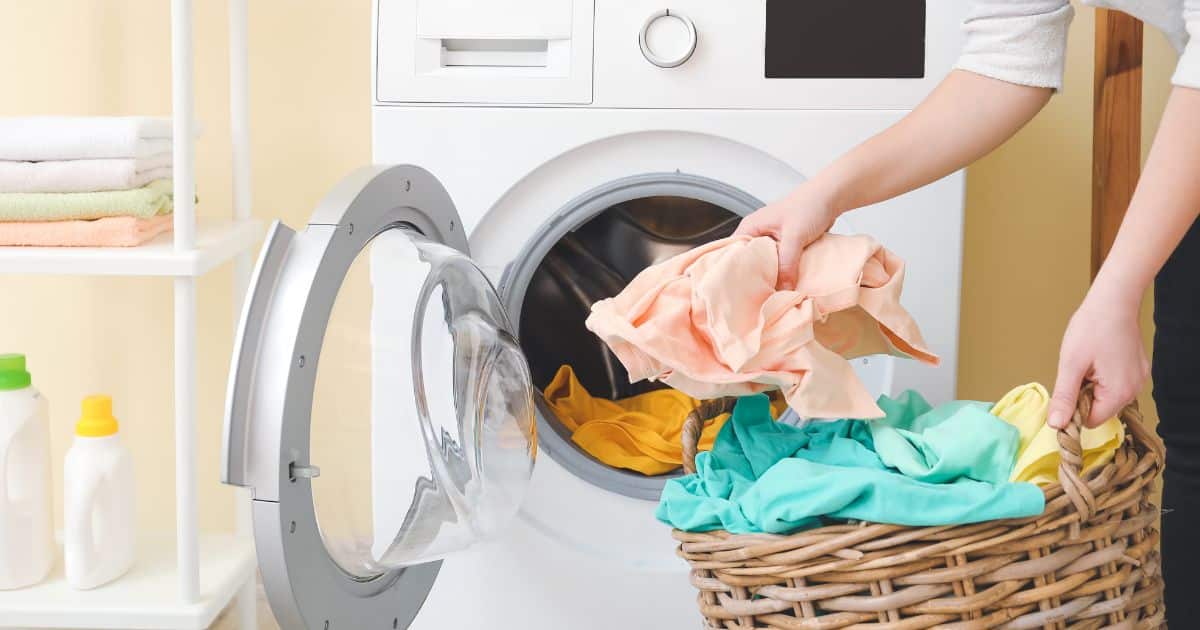
The washing machine itself can affect laundry hygiene, particularly when moisture becomes trapped inside the appliance. Front-loading models use a rubber gasket around the door to create a watertight seal, and folds in that gasket can collect water, detergent residue, lint, hair, and other debris. If the interior remains damp between cycles, those conditions can support the growth of mold and mildew.
A musty odor is often a sign that the machine needs attention rather than evidence that the laundry detergent itself is failing. Odors can develop when organic material and detergent residue accumulate in wet areas, and those odors can subsequently transfer to freshly washed fabrics. Keeping the machine clean and allowing it to dry between loads is therefore an important part of a healthy laundry routine.
Top-loading machines do not have the same large front-door gasket, which can make moisture management easier in some households. However, this does not make top-loaders immune to microbial buildup, since any washing machine can accumulate residue when it is poorly maintained. The more useful takeaway is that machine design and maintenance both matter when evaluating persistent odors or buildup.
How to Keep a Front-Loading Washer Fresh
If a front-loading washer is already in the home, replacing it is usually unnecessary due to moisture concerns. A few maintenance habits can significantly reduce conditions that allow buildup to develop, particularly when performed consistently.
After washing, consider these steps:
- Leave the door ajar so moisture can evaporate.
- Wipe the rubber gasket regularly, including the folds.
- Clean the detergent dispenser to prevent residue accumulation.
- Use the manufacturer’s cleaning cycle according to the appliance instructions.
- Measure detergent carefully rather than assuming more product creates cleaner clothes.
- Remove finished laundry promptly instead of allowing wet fabrics to sit inside the machine.
These habits can help reduce musty odors and unnecessary residue without requiring a new appliance.
How to Simplify a Lower-Toxin Laundry Routine
A lower-toxin laundry room does not need to contain a long list of specialized products. In many cases, the simplest strategy is to identify which products provide an actual cleaning function and which primarily add fragrance, appearance, or unnecessary complexity. Reducing the number of products used can also make it easier to identify potential triggers when skin or fragrance sensitivity occurs.
A practical laundry routine can focus on these priorities:
- Choose fragrance-free products when fragrance is a concern.
- Use only the recommended amount of detergent.
- Skip products that provide scent without a necessary cleaning function.
- Ventilate the washing machine between loads.
- Clean the gasket and detergent dispenser regularly.
- Replace products when they run out rather than discarding everything immediately.
This approach keeps the emphasis on function rather than marketing. A laundry product does not need to be labeled “clean” or “non-toxic” to be appropriate, and a product labeled “natural” is not automatically suitable for every person.
Non-Toxic Laundry FAQ
Are laundry scent boosters bad for you?
Scent boosters are designed to increase fragrance on washed fabrics, which can increase exposure to fragrance ingredients throughout the day. Some fragrance components can trigger allergic contact dermatitis or irritation in susceptible individuals. Removing scent boosters is, therefore, a simple option for people who want to reduce unnecessary fragrance exposure.
What should be avoided in laundry detergent?
There is no universal list of ingredients that every person needs to avoid. However, people experiencing fragrance sensitivity may want to prioritize fragrance-free detergents and compare ingredient lists rather than relying exclusively on marketing claims.
Is fragrance-free laundry detergent better for sensitive skin?
Fragrance-free detergent can be a useful option for people with sensitive or reactive skin because fragrance ingredients are recognized causes of allergic contact dermatitis. However, skin reactions can have many causes, so persistent or severe symptoms should be evaluated appropriately rather than automatically attributed to laundry products.
Why does a front-loading washing machine smell musty?
A front-loader can develop odors when moisture, detergent residue, lint, and other debris accumulate around the rubber door gasket or other internal areas. Keeping the door open between cycles, cleaning the gasket and dispenser, and using the manufacturer’s recommended cleaning cycle can help prevent buildup.
Is a top-loading washing machine healthier than a front-loader?
Neither design is inherently healthier in every respect. Front-loaders can be efficient with water and energy, but require attention to moisture management around the door gasket. At the same time, top-loaders have a different design that may make drying and maintenance easier in some situations.
The Bottom Line
A lower-toxin laundry routine does not require replacing every detergent, appliance, or fabric-care product in the home. Removing unnecessary scent boosters, choosing fragrance-free detergent when appropriate, using detergent correctly, and keeping the washing machine dry between cycles can simplify the routine while addressing common sources of fragrance exposure and laundry odors.
The most useful changes are often the least complicated. Clean clothing does not need to smell strongly perfumed, more detergent does not necessarily mean cleaner laundry, and a washing machine cannot stay fresh if moisture and residue are allowed to accumulate. By focusing on function, maintenance, and individual sensitivities, the laundry room can become a simpler and more intentional part of a lower-toxin home.
References:
- Zareshahrabadi Z, Amirzadeh N, Pakshir K, Nasr R, Mohammadi R, Zomorodian K. Evaluation of building washing machines as an extreme environment for potentially pathogenic fungi. Scientific Reports. 2023 Dec 4;13(1):21408. doi: 10.1038/s41598-023-48598-0. PMID:38049507; PMCID:PMC10695939
- Bockmühl DP, Schages J, Rehberg L. Laundry and textile hygiene in healthcare and beyond. Microbial Cell. 2019 Jul 1;6(7):299–306. doi: 10.15698/mic2019.07.682. PMID:31294042; PMCID:PMC6600116
- Institute of Medicine (US) Committee on Damp Indoor Spaces and Health. Damp Indoor Spaces and Health. Washington (DC): National Academies Press (US); 2004. Chapter 4, Toxic Effects of Fungi and Bacteria. Available from:https://www.ncbi.nlm.nih.gov/books/NBK215642/
- Rádis-Baptista, G. (2023). Do synthetic fragrances in personal care and household products impact indoor air quality and pose health risks? Journal of Xenobiotics, 13(1), 121–131.https://doi.org/10.3390/jox13010010
- van Amerongen, C. C. A., Ofenloch, R. F., Cazzaniga, S., Elsner, P., Gonçalo, M., Naldi, L., Svensson, Å., Bruze, M., & Schuttelaar, M. L. A. (2021). Skin exposure to scented products used in daily life and fragrance contact allergy in the European general population – The EDEN Fragrance Study. Contact Dermatitis, 84(6), 385–394.https://doi.org/10.1111/cod.13807
- Potera C. Scented products emit a bouquet of VOCs. Environmental Health Perspectives. 2011;119(1):A16. doi: 10.1289/ehp.119-a16. PMID: 21196139; PMCID: PMC3018511.